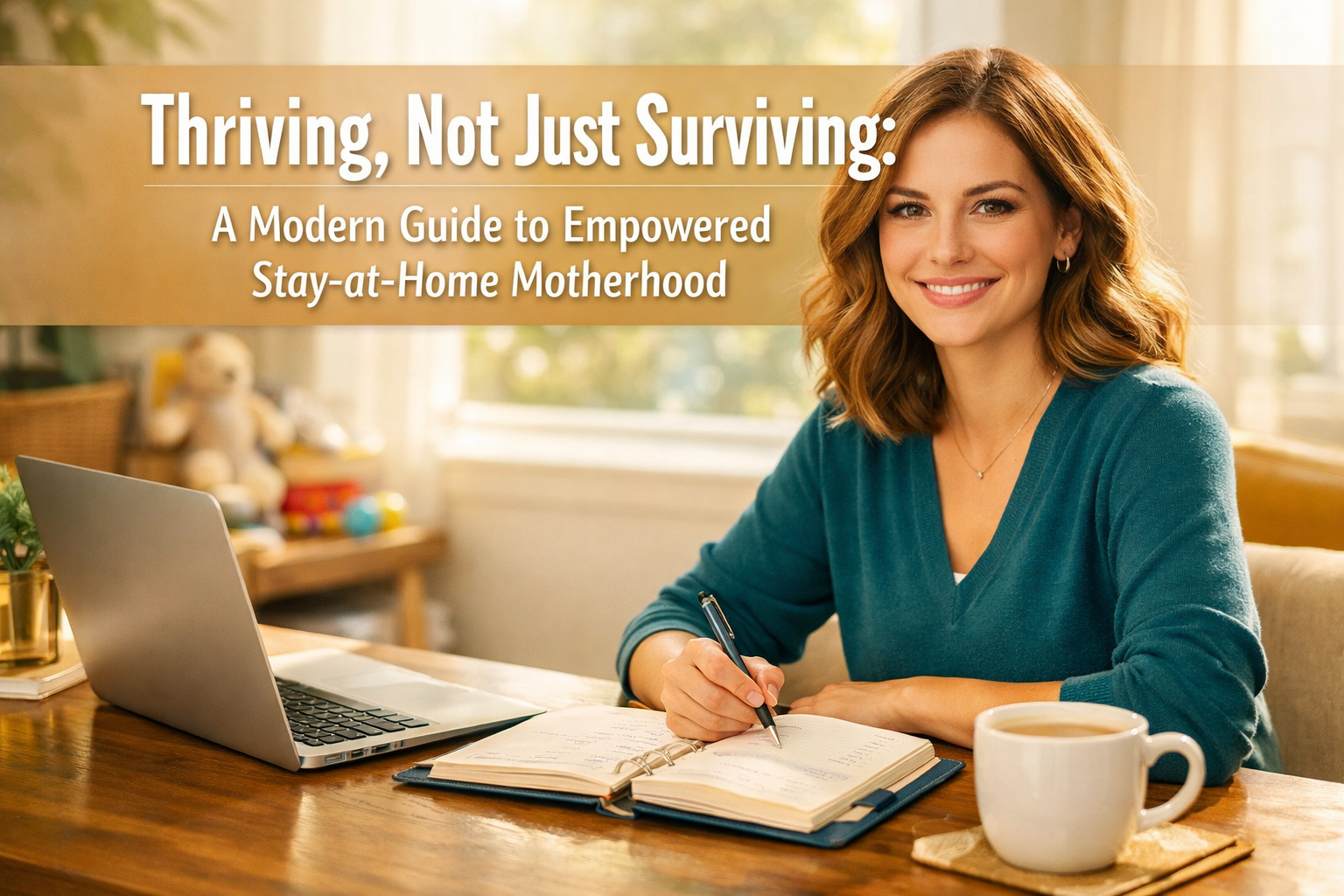
Thriving, Not Just Surviving: A Modern Guide to Empowered Stay-at-Home Motherhood (How to Make Being a Stay-at-Home Mom Work)
Last updated: April 2, 2026
Quick Answer
Knowing how to make being a stay-at-home mom work comes down to three things: intentional structure, financial clarity, and protecting your personal identity alongside your family role. Moms who thrive in this role don’t wing it — they build systems, set boundaries, and treat their own goals as non-negotiable. This guide covers exactly how to do that.
Want to explore AI without the overwhelm?
This free 3-day virtual event teaches simple, actionable ways to use AI to save time and create income opportunities — perfect for busy moms.
👉 Save your free spot
Key Takeaways
- A written daily and weekly schedule reduces decision fatigue and creates space for personal goals
- Flexible income streams (freelancing, tutoring, virtual work) let you earn without sacrificing childcare
- A household budget with a personal “discretionary” line for the stay-at-home parent prevents financial resentment
- Maintaining professional skills — even 2–3 hours a week — protects long-term career options
- Mental health depends on regular alone time, adult connection, and a clear sense of personal identity beyond “mom”
- Saying no to over-commitment is a strategy, not a failure
- The most successful stay-at-home moms treat the role like a job: with goals, reviews, and boundaries [3]
- Financial planning should include the stay-at-home parent’s retirement contributions, not just the working partner’s

What Does It Actually Mean to Make Being a Stay-at-Home Mom Work?
Making this role work means designing it — not just enduring it. A stay-at-home mom who thrives has clarity about her daily structure, her financial role in the household, and her identity outside of caregiving.
This is not about perfection. It’s about building a life that feels purposeful rather than reactive. The difference between surviving and thriving in this role almost always comes down to intentionality: knowing what you want from the day before the day starts [3].
Who this applies to: Any parent (regardless of gender) who is the primary at-home caregiver and wants to feel capable, valued, and personally fulfilled in that role.
How to Make Being a Stay-at-Home Mom Work: Balancing Home Life and Personal Goals
The most effective strategy is time-blocking — assigning specific hours to specific roles. Without this, the home role expands to fill every available minute, leaving no space for personal development.
A practical weekly structure:
| Time Block | Purpose |
|---|---|
| Morning (before kids wake) | Personal time: exercise, journaling, learning |
| Core hours | Childcare, household tasks |
| Nap time / quiet time | Work, creative projects, or rest |
| Evening (after bedtime) | Partner time, planning, or personal goals |
Common mistake: Waiting until the kids are asleep to do everything personal. That leads to exhaustion and resentment. Even 20 minutes in the morning, protected consistently, changes the dynamic.
“The moms who feel most fulfilled in this role aren’t the ones doing the most — they’re the ones who’ve decided what matters and said no to the rest.”
Choose this if: You feel like the day “happens to you” rather than you directing it. Start with just one protected personal block per day and expand from there.
How Can Stay-at-Home Moms Generate Income Without Sacrificing Family Time?
Flexible, remote income is genuinely accessible in 2026 — but the key is matching the work type to your actual available hours, not an idealized schedule.
Remote income options worth considering:
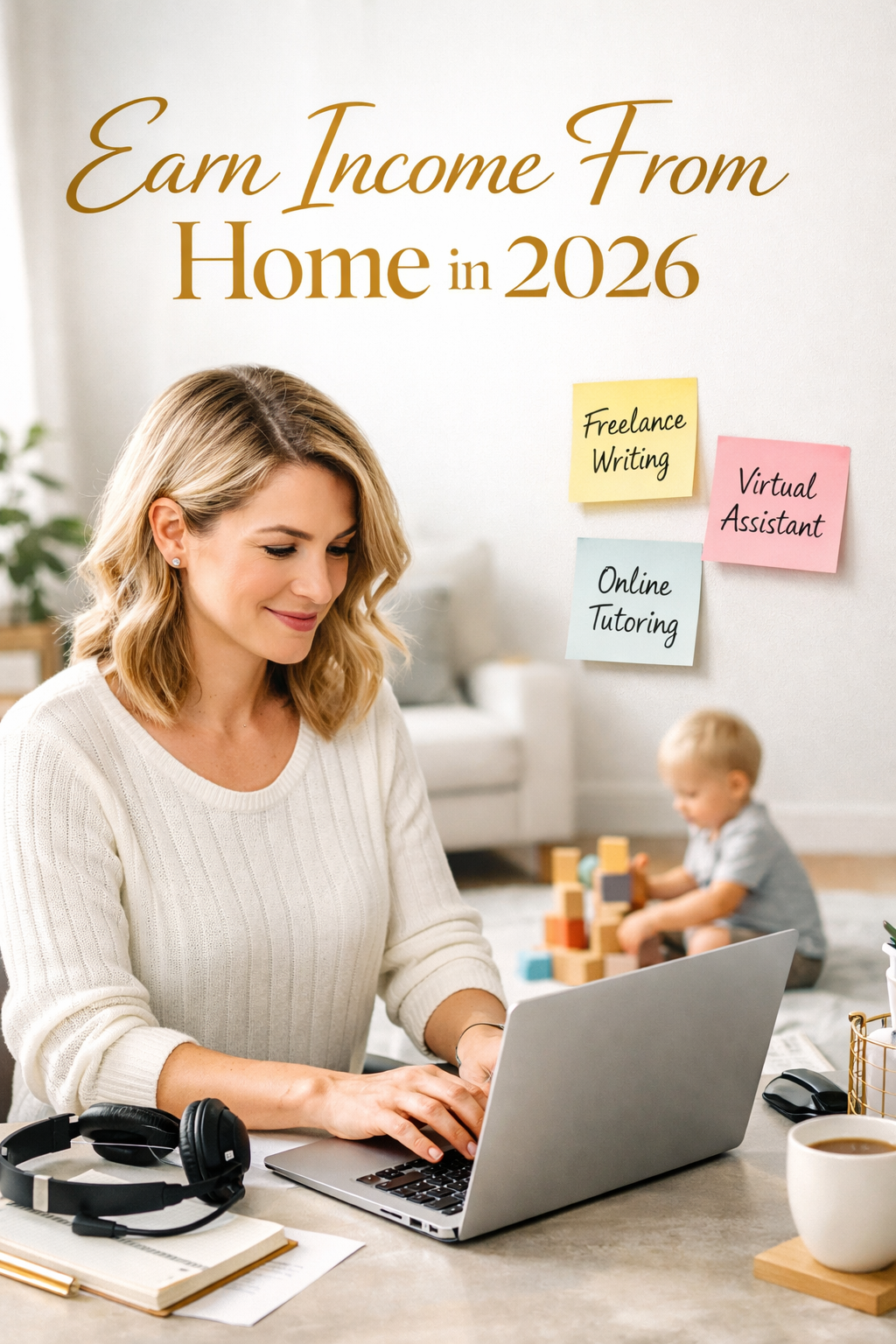
- Freelance writing or editing — project-based, fits nap-time windows
- Virtual assistant work — 10–20 hours/week, fully remote
- Online tutoring or teaching — scheduled sessions, predictable hours
- Social media management — asynchronous, works around interruptions
- Selling digital products (templates, courses, printables) — earns passively after initial setup
- Bookkeeping or accounting — high hourly rate, strong demand for remote work
Edge case: If your child is under 12 months, income-generating work is harder to sustain. Focus on skill maintenance (free courses, professional reading) rather than active income until your schedule stabilizes.
Maintaining professional skills matters even if you’re not earning yet. Platforms like Coursera, LinkedIn Learning, and industry-specific communities allow you to stay current in your field for little or no cost.
What Financial Planning Strategies Help Stay-at-Home Moms Manage Household Budgets?
Financial clarity is one of the most overlooked tools for making the stay-at-home role sustainable. Without it, money becomes a source of tension rather than a shared resource.
Four financial habits that make a real difference:
- Build a household budget together — both partners should understand income, fixed costs, and discretionary spending
- Create a personal spending line — the stay-at-home parent should have a set monthly amount that is theirs, no questions asked
- Track the economic value of your role — childcare, cooking, household management, and logistics have real dollar equivalents; knowing this prevents undervaluing your contribution
- Prioritize your own retirement savings — a spousal IRA (in the U.S.) allows a non-earning partner to contribute to retirement; this is often skipped and creates long-term financial vulnerability
Decision rule: If money conversations in your household regularly end in conflict, the issue is usually a lack of shared visibility — not the actual numbers. A shared budgeting app used by both partners resolves most of this.
Common mistake: Treating the household income as “the working partner’s money.” This dynamic erodes financial confidence and independence over time.
How Do Successful Stay-at-Home Moms Maintain Mental Health and Personal Identity?
Mental health in this role depends on two things: regular time that belongs only to you, and a clear sense of who you are beyond your children.
This isn’t selfish — it’s structural. A caregiver who has no identity outside of caregiving is more vulnerable to burnout, anxiety, and loss of self-worth when children grow more independent.
Practical identity-maintenance strategies:
- Keep at least one hobby or interest that has nothing to do with parenting
- Maintain friendships outside of “mom groups” (though those have value too)
- Use a journal or podcast to process your experience — resources like Mom’s Guide to Finding Herself address identity loss directly
- Schedule a monthly personal “review” — ask yourself: what’s working, what’s draining me, what do I want more of?
- Name your values explicitly; when daily decisions align with your values, the role feels meaningful rather than depleting
Edge case: If you’ve been at home for more than two years and feel you’ve “lost yourself,” that’s common and recoverable — but it usually requires deliberate action, not just time. Start with one small thing that is purely yours.

What Are the Most Common Mistakes That Make the Stay-at-Home Role Unsustainable?
The role becomes unsustainable when it lacks structure, financial equity, and a personal identity. These three gaps compound quickly.
Mistakes to avoid:
- Treating every hour as “available” — without protected time, you’ll always be on call
- Skipping your own financial planning — depending entirely on a partner’s income without your own savings or skills is a real risk
- Comparing your role to an idealized version — social media portrayals of stay-at-home motherhood are curated, not realistic
- Waiting to “feel ready” before pursuing personal goals — the right time is usually now, in small steps
- Ignoring burnout signals — chronic irritability, emotional numbness, and resentment are signs the current system isn’t working
Want to explore AI without the overwhelm?
This free 3-day virtual event teaches simple, actionable ways to use AI to save time and create income opportunities — perfect for busy moms.
Conclusion: How to Make Being a Stay-at-Home Mom Work, Starting Today
The stay-at-home role is one of the most demanding jobs that exists — and one of the least formally supported. But it can be deeply fulfilling when it’s built with intention rather than just accepted as a default.
Your next steps:
- Block one 20-minute personal window into tomorrow’s schedule and protect it
- Write down three personal goals that have nothing to do with your children
- Review your household budget and confirm you have a personal discretionary line
- Look into one remote income or skill-maintenance option that fits your current hours
- Identify one resource — a podcast, a book, a community — that speaks to your identity, not just your role [2][4]
You don’t have to overhaul everything at once. Start with one change, build from there, and treat your own wellbeing as a household priority — because it is.
Frequently Asked Questions
Q: Is it realistic to earn income as a stay-at-home mom with young children?
Yes, but be honest about available hours. Even 5–10 hours a week of freelance or virtual work is achievable for many moms with children over 12 months. Match the work type to your actual schedule, not an ideal one.
Q: How do stay-at-home moms handle feeling financially dependent?
The most effective approach is a combination of a personal spending allowance, shared budget visibility, and maintaining some form of earning or skill development. Financial independence doesn’t require a full-time job — it requires a plan.
Q: What’s the best way to maintain professional skills while at home?
Dedicate 2–3 hours per week to your field: read industry publications, take short online courses, or participate in professional communities. This keeps your resume credible and your confidence intact.
Q: How do I stop feeling like I’ve lost my identity as a stay-at-home mom?
Start by naming one thing you valued about yourself before becoming a parent — a skill, an interest, a personality trait — and find one small way to express it this week. Identity isn’t lost; it’s often just buried under logistics.
Q: What financial accounts should stay-at-home moms have in their own name?
At minimum: a personal checking or savings account, and a spousal IRA if you’re in the U.S. Having accounts in your own name provides financial security regardless of relationship circumstances.
Q: How do successful stay-at-home moms avoid burnout?
They consistently protect personal time, ask for help without guilt, and regularly assess whether their current setup is working. Burnout is usually a signal that something structural needs to change, not that they’re failing.
Q: Can a stay-at-home mom return to the workforce after several years?
Yes — especially if she’s maintained skills, kept professional connections, and has any freelance or volunteer work to show. The gap matters less than how you frame what you did during it.
Q: How much should a household budget allocate for a stay-at-home parent’s personal spending?
There’s no universal number, but the principle is that both partners should have equal discretionary spending — whatever the household can afford. Unequal access to personal spending is a common source of relationship tension.
References
[1] Watch – https://www.youtube.com/watch?v=GlM-0o2hg7Q
[2] Id1762711233 – https://podcasts.apple.com/us/podcast/moms-guide-to-finding-herself-rediscovering-identity/id1762711233
[3] Watch – https://www.youtube.com/watch?v=-m-1GjLlhwQ
[4] Survival Guide To Motherhood 9780736990059 – https://www.harvesthousepublishers.com/books/survival-guide-to-motherhood-9780736990059/